THCa: The more you know...
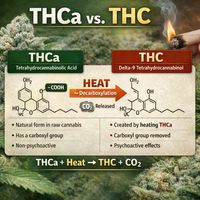
What Is THCa and How Does It Convert Into THC?
If you’ve searched for THCa flower, THCa vs THC, or wondered how THCa converts into THC, here’s the clear and simple explanation.
Cannabis plants naturally produce THCa (tetrahydrocannabinolic acid) — not THC.
THC is created when heat activates THCa through a process called decarboxylation.
THCa (Tetrahydrocannabinolic Acid)
• Found naturally in raw cannabis
• Contains an extra chemical group (–COOH)
• Not converted yet
THC (Delta-9 THC)
• Formed after heat is applied
• Created when THCa loses its extra chemical group
• Result of the decarboxylation process
Simple Formula:
THCa + Heat → THC + CO₂
When heat is introduced, a small portion of the molecule breaks off and releases as carbon dioxide (CO₂). What remains is THC.
What Is Decarboxylation?
Decarboxylation is the scientific term for the heat-activation process.
It happens when cannabis is:
✔️ Smoked
✔️ Vaped
✔️ Heated during cooking
✔️ Processed under controlled temperatures
Without heat, THCa remains in its original form.
With heat, it transforms.
Why Temperature and Time Matter
THCa conversion depends on:
• How hot the material gets
• How long it stays heated
Higher temperatures convert THCa faster.
Lower temperatures take longer.
Too much heat over extended time can begin breaking down THC further, which is why controlled temperature is important during processing.
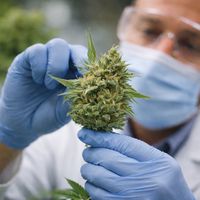
THCa vs THC: Why Dispensary “Potential THC” Testing Is Different from Farm Bill Testing
Why do dispensaries list Total THC?
Why must Farm Bill hemp stay under
0.3% Delta-9 THC?
And, why does THCa flower and dispensary flower look identical?
The answer comes down to how the product is tested and legally classified — not necessarily major chemical differences in the plant itself.
How Dispensary Cannabis Tests Potential THC:
In state-regulated marijuana programs, licensed labs calculate and report: Total THC = Delta-9 THC + (THCa × 0.877)
Why?
Because THCa converts into THC when heated through a process called decarboxylation. When cannabis is smoked, vaped, or cooked, THCa loses a small chemical group and becomes Delta-9 THC.
Dispensary lab reports are designed to show the activated potency — meaning how strong the product will be once it’s heated and consumed.
That’s why you’ll commonly see:
Total THC percentage
Delta-9 THC percentage
THCa percentage
Full cannabinoid profiles
This testing model reflects real-world use.
How Cannabis Is Tested Under the 2018 Farm Bill:
Hemp is legally defined as; cannabis containing no more than 0.3% Delta-9 THC on a dry-weight basis
Here’s the important distinction:
Hemp is classified based on Delta-9 THC concentration. Testing typically occurs pre-harvest for regulatory compliance. The legal definition focuses specifically on Delta-9 THC levels. In other words, hemp is categorized based on whether it exceeds the 0.3% Delta-9 THC limit, not necessarily based on how much THC could be produced after heating.
Are Farm Bill Compliant Products and Dispensary Products Chemically Different?
In many cases, the flower itself can test very similarly in overall cannabinoid content—especially when high in THCa.
The primary differences are:
✔️ How the product is tested
✔️ When it’s tested
✔️ How it is legally defined
The distinction is largely regulatory, not because one plant is dramatically different from another in chemical makeup.
Disclaimer:
All THCa products sold at Buzz-A Smoke Shop test under 0.3% Delta-9 THC (dry weight) and are compliant under the federal 2018 Farm Bill.